
Where it started: Root Bear on the Playdate
The idea was not ours to begin with. Root Bear is a game built by TEAM ROOT for the Playdate, the little yellow handheld console. The rules are brutally simple. You turn the crank to pour a root beer and stop at the line you were given. A bear customer then judges the result, and judges it harshly.
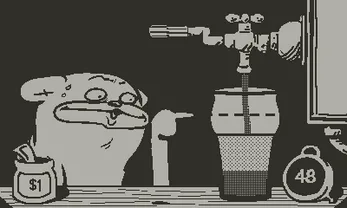
A scene from the original Root Bear. You open the tap, fill the glass, stop at the line, and the bear standing next to you rates the pour. A one-bit black-and-white screen, right down to the tip jar - this single frame is where our project began. © TEAM ROOT · Playdate catalog · itch.io
What makes the game work is not the screen, it is your hands. How far you open the crank changes the flow rate, and when you close it decides the outcome. There is a reason it took both the sound design award and the Cranky Award at the 2023 Playdate Community Awards. (where we first saw the update)
After staring at it for a while, one thought stuck.
What if that crank were a real lever?
Not a handle drawn on a screen, but a lever you pull with your hand. A touch panel draws the rising glass; a real controller computes the flow and the verdict. Where the original pours root beer, ours pours beer. In effect, moving a palm-sized console game onto an arcade cabinet.
So we decided to build it. Not the way you build a toy, but with a PLC and an HMI. We happened to have everything on hand.
Senbrix is our PLC development environment, where ladder logic and C# live in one program. Senvas is our industrial HMI, where AI builds the screens. Both are products we are developing. They normally go into factory equipment; this time we used them purely to play.
That gave the hobby project its ground rule.
It is a game cabinet, but the inside is real industrial equipment. The PLC owns the game logic; the HMI only handles presentation.
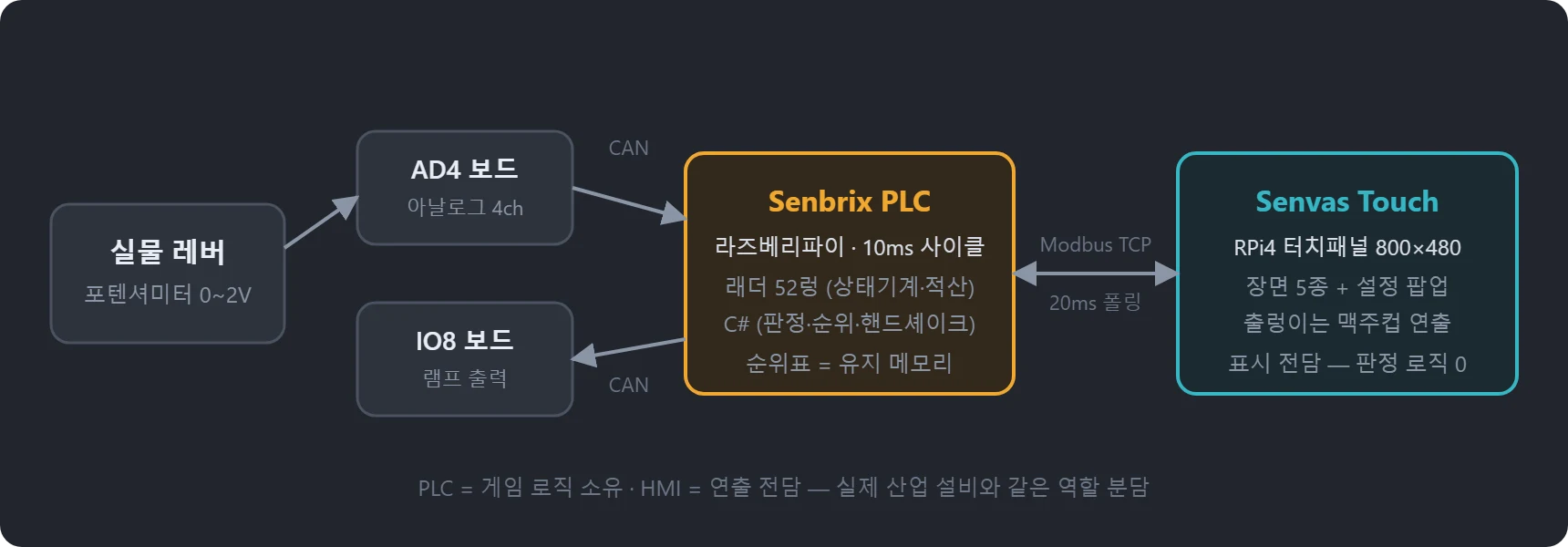
There is exactly one physical input, a potentiometer lever. The further you tilt it, the harder it pours. Fill level, scoring, and the leaderboard all live on the PLC side, and the touch panel reads those values and draws them. The screen and the record cannot disagree, because there is a single source of truth for the verdict, and it is the PLC. (Old plant-building habits followed us straight into the hobby.)
Building it with the product AI workflow
Our products’ AI workflow ran the build itself, and that is one detail that made this project fun. Senbrix and Senvas both have an interview, design, plan, implement, verify sequence, and the AI sits inside the editor and checks in with us at each stage.
Because of that, most of what we did was say “here is what I want.” As the interview went on, the spec grew on its own.
- A bank of toggle switches became an analog lever (flow has to change with the tilt, or the feel dies)
- One round became 10 rounds with a total score and a hall of fame (three-letter initials in the TOP10)
- A difficulty popup (Easy / Normal / Hard, with a time limit)
Everything that got talked up in the interview fell straight into PLC logic and screen design, and by the end of the day there was a game cabinet that actually ran. Honestly, that was the most surprising part.
Tuning the game rules: target line, grades, time bonus
The game rules were adjusted over a few play sessions. Personally, this was the most enjoyable part.
- The target line is random between 25% and 90%. Low targets are what create the skill of “just a little, but precisely”
- Grades: PERFECT (±1.5%) / GREAT (±4%) / GOOD (±8%) / BAD, with an instant FAIL on overflow
- Time bonus - a successful pour adds up to +20 points in proportion to the time remaining. Fast, and accurate
- The time limit is hidden on screen - not knowing when it ends is far more tense
The Senvas HMI screen: sloshing beer and a tap tower
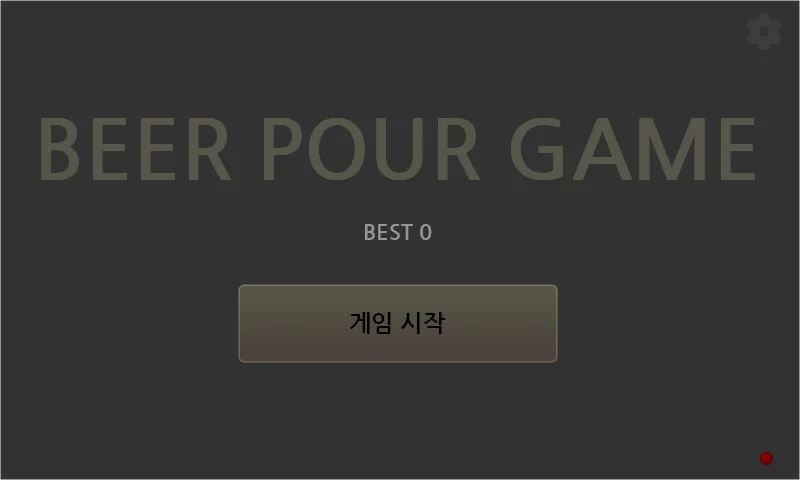
Senvas, the HMI side, was built the same way. Five scenes (title, game, result, leaderboard, initials) swap within a single 800×480 touch panel screen.
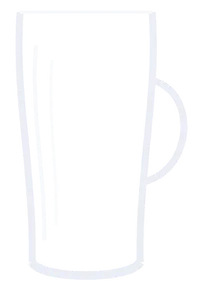
The centerpiece is, of course, the beer mug. It started as a flat vertical gauge, but we wanted it to look like liquid going in, so we switched to a dedicated liquid control (it has a sloshing fill animation built in) and layered a beer mug with a transparent interior on top of it. The mug silhouette is a pilsner shape drawn with Bezier curves - the first version came out as an angular trapezoid and we sent it back.
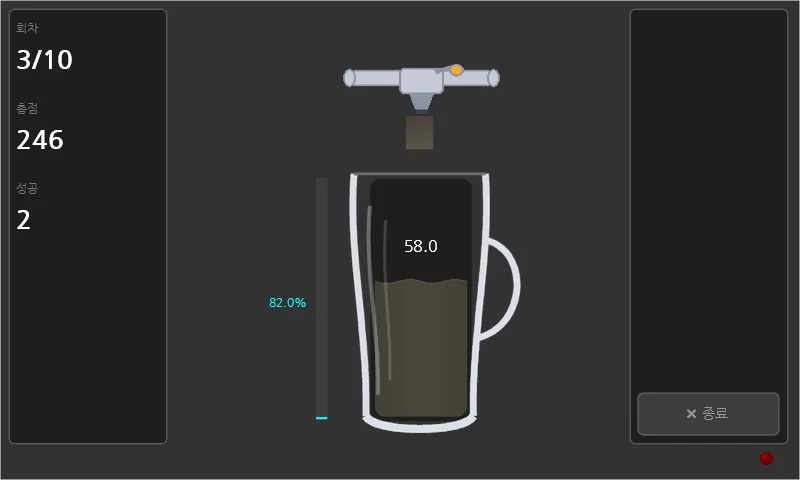
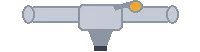
Above the mug sits a beer tap tower. Open the lever and a stream appears below the spout (three thicknesses, mapped to the lever angle); close it and the stream disappears. Seeing the cause and effect - “it comes out of there” - transforms the feel of the control.
One detail matters. The target line and the liquid inside the mug must use the same vertical range. At one point the target bar shifted by a few pixels because we put a percentage label on the mug, and it was caught by a report: “I hit the line and got GOOD, then went slightly over and got PERFECT.” The scale on the screen is the fairness of the game.
End of day one: moving onto the real hardware
Moving onto the real hardware is the last step after everything runs fine on a PC, and it is never entirely smooth. Linux permissions, display sessions - we tripped over a few things, but in the end we had the object we had imagined: pull the lever and the beer rises, let go and the verdict lands.
Release the lever, the verdict appears after one second, the result shows for two, and the next round starts. Ten rounds bring up the total and the leaderboard, and if nobody touches it for 60 seconds it quietly returns to the title.
What is left:
- Making the lever response snappier
- Highlighting your own entry on the leaderboard
- And a physical enclosure - it will be truly finished when a real tap handle goes over the lever
Recap: building a PLC HMI arcade cabinet
This PLC HMI arcade cabinet was only meant as a hobby build, and by the end it felt like we had just commissioned a piece of plant equipment. The PLC-owns-logic, HMI-does-presentation split, the lever calibration, the on-site (well, next-desk) troubleshooting - it was our day job applied directly to play.
And this may be the most honest way to show what our products do. Better than ten polished equipment demos, a beer game cabinet thrown together over a weekend says far more about what you can actually build with them.
The core of this cabinet is the split where the PLC holds the single source of truth for the verdict and the HMI only handles presentation.
Coming in Part 2: machining a lever worthy of a 950-won potentiometer, and a failed transplant of Pro Controller haptics. We modeled a real ball lever for a potentiometer that did not even have a knob, printed it in 3D, and then went down in flames trying to add vibration feedback.

The original Root Bear title screen. One game for the Playdate, a palm-sized yellow console, is where all of this started. © TEAM ROOT · Playdate catalog
The original Root Bear is on the Playdate catalog, and an earlier build is on itch.io. If you are curious about the feel of pouring with the original crank, start there. Respect to TEAM ROOT for making a great game - Cole O’Brien · Andrea Cabral · Beau QP · Alex Sussman.
The screens from the original shown in this post are quoted to introduce the game; the copyright belongs to TEAM ROOT.
Contact
- Email: [email protected]
- Instagram: https://www.instagram.com/going.sen/
- Website: https://intosen.com/kr/consult/
Comments
Enter a nickname to leave a comment, or sign in with Google or GitHub.